
Ultrasound-guided puncture performed by nursing staff as a strategy for the temporary preservation of a brachio-basilic arteriovenous fistula with circumferential mural thrombosis in a patient undergoing high-volume online hemodiafiltration
A case report.
DOI:
https://doi.org/10.56867/Keywords:
Ultrasound-guided vascular access cannulation, Preservation of the arteriovenous fistula, A case reportAbstract
Introduction: Vascular access dysfunction is a major limitation of dialysis therapy, often necessitating the placement of a central venous catheter. This procedure increases patient morbidity and mortality. Consequently, ultrasound-guided cannulation performed by trained nursing staff represents an effective strategy for the temporary preservation of complex access sites.
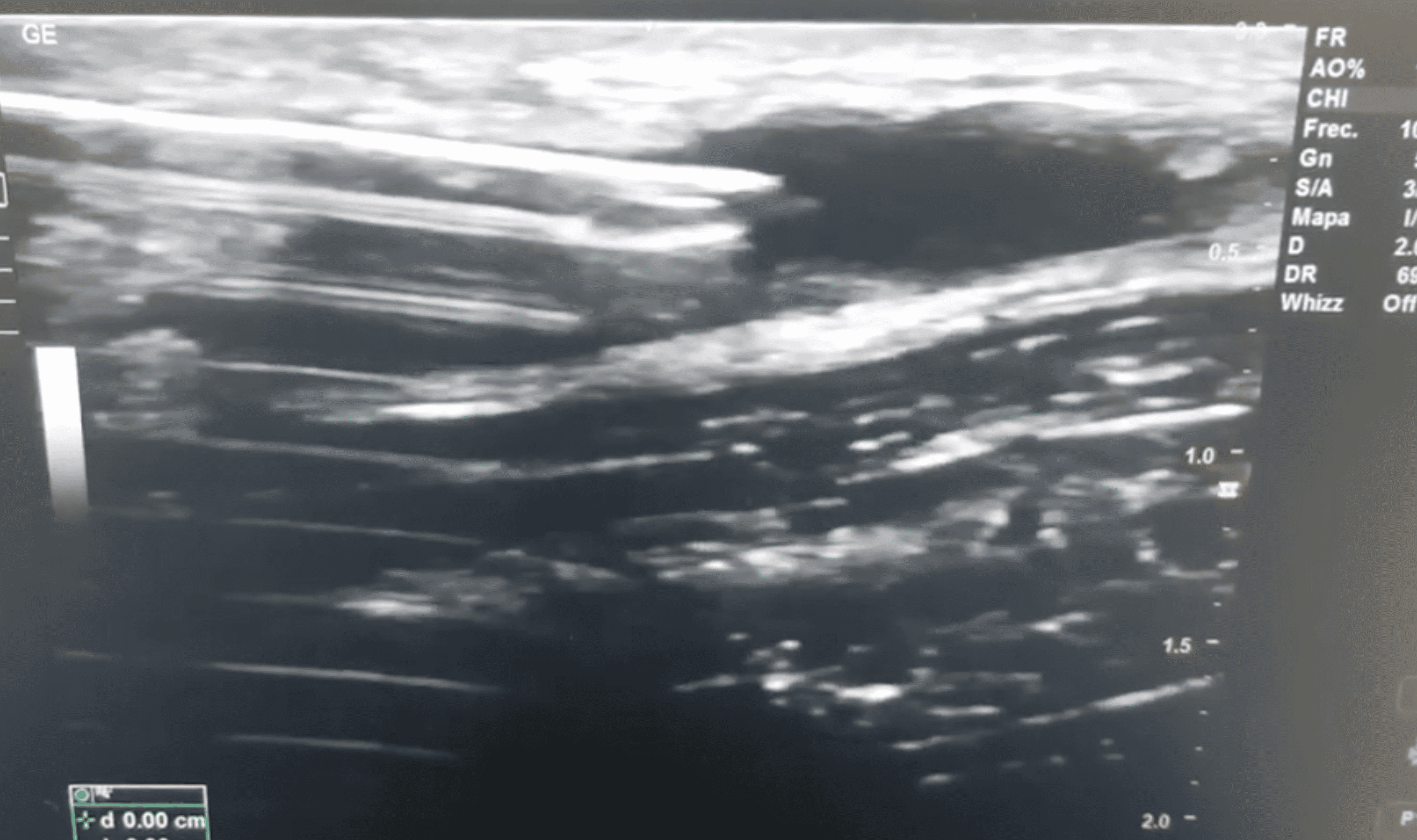
Materials and Methods: This is a case report of a 53-year-old female patient with stage 5 chronic kidney disease who had been undergoing hemodiafiltration for 11 months. Vascular ultrasound revealed circumferential mural thrombosis in the distal venous segment, accompanied by luminal narrowing. Under medical direction, nursing staff undertook cannulation of the patent segment using ultrasound guidance for three months—employing a 16G needle and a pump flow rate of 350 mL/min—with the aim of delaying the need for a central venous catheter.
Results: The vascular access remained functional throughout the observation period, allowing treatment to continue. Follow-up data showed recirculation rates of 15% to 18%, a progressive decrease in substitution fluid volume, and prolonged post-cannulation hemostasis; no infiltration or total thrombosis events occurred, as confirmed by subsequent Doppler ultrasound.
Conclusions: Ultrasound-guided cannulation by nursing staff is a viable, temporary strategy for extending the lifespan of critically compromised vascular access sites. However, its continued application must be evaluated based on dialysis adequacy indicators and the hemodynamic evolution of the vessel.
Downloads
Published
Issue
Section
License
Copyright (c) 2026 Jennifer Rubi Loor Peralta (Author)

This work is licensed under a Creative Commons Attribution-NonCommercial-ShareAlike 4.0 International License.
 10.56867