
Older adult with refractory hypertension.
Reporte de caso.
DOI:
https://doi.org/10.56867/Keywords:
Older adult, Refractory hypertensionAbstract
Introduction: Primary hyperaldosteronism is a common cause of secondary hypertension associated with target-organ damage (myocardial fibrosis, arterial stiffness, and albuminuria) resulting from direct effects on the mineralocorticoid receptor—beyond hemodynamic impacts on blood pressure. Although it is a potentially curable, independent cardiovascular risk factor, it remains underdiagnosed; furthermore, in the elderly, patients are rarely considered candidates for definitive evaluation or treatment.
Case Report: An 89-year-old male with a history of COPD, former smoking, and hypothyroidism presented with difficult-to-control hypertension since age 57, refractory to multiple regimens and requiring six antihypertensive agents at optimal doses (ARBs, alpha-blockers, calcium channel blockers, and diuretics). He was referred to nephrology due to persistent proteinuria (albumin-to-creatinine ratio [ACR]: 545 mg/g); baseline echocardiography showed a global strain of -10%, grade II diastolic dysfunction, and elevated filling pressures.
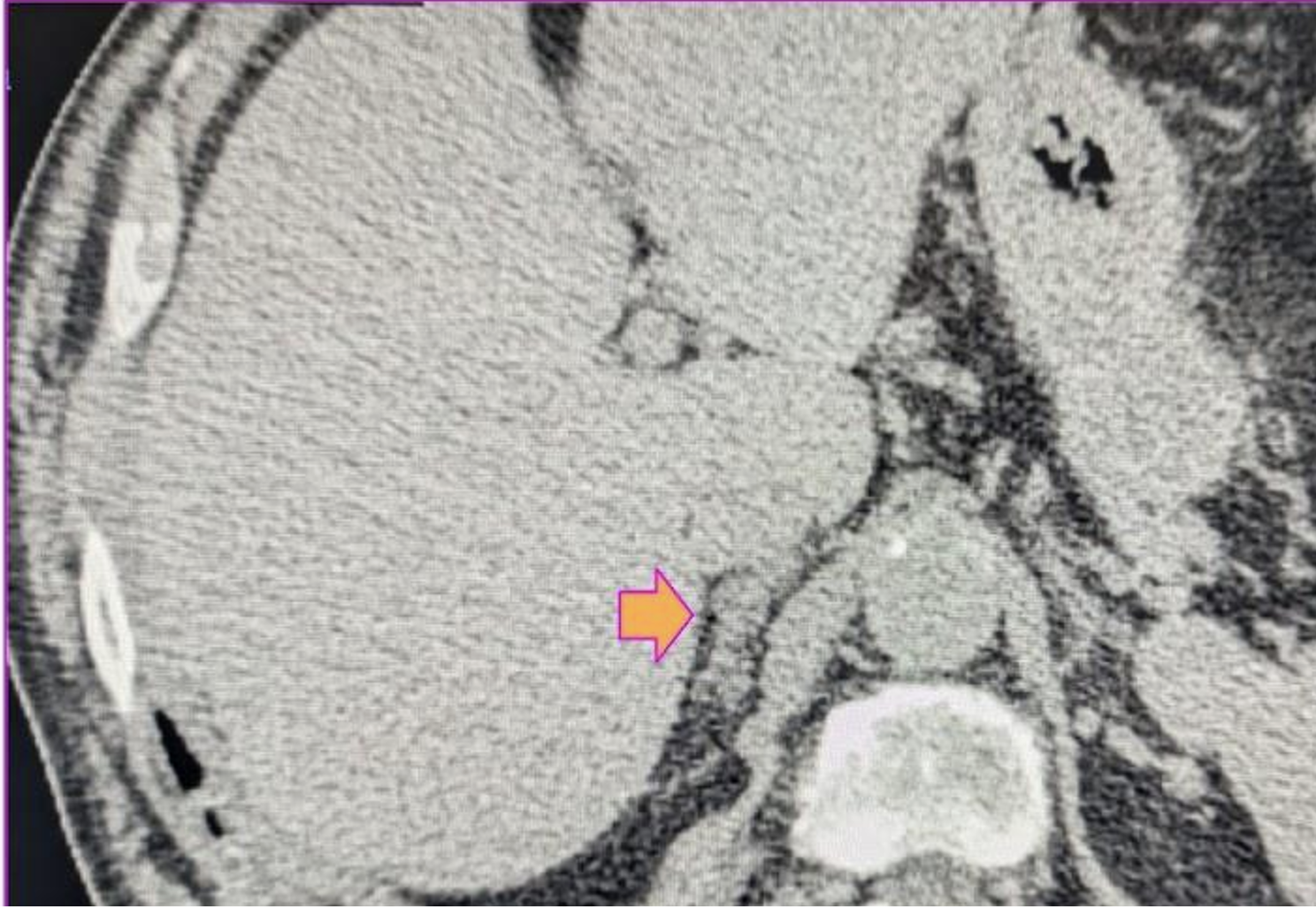
Incidental findings during hospitalization for pneumonia included hypokalemia and an elevated transtubular potassium gradient; aldosterone-to-active renin ratio results were inconclusive due to medication interference. Imaging revealed a left renal tumor (40 mm) and a right adrenal nodule (9 mm); empiric spironolactone therapy and potassium replacement were initiated.
Biochemical, imaging, and clinical findings were consistent with a unilateral aldosterone-producing adenoma; adrenalectomy was performed.
Results: The 5-year risk of renal failure decreased from 2.10% to 0.83%, ACR dropped from 545 to 34.3 mg/g, the antihypertensive regimen was reduced from six to two drugs, and blood pressure levels decreased.
Conclusions: Confirmatory testing should not delay the initiation of treatment when significant, concordant findings are present. Suspending pharmacological treatment for 4 to 6 weeks improves the accuracy of hormonal sampling. The objectives include: reducing risks associated with target-organ damage; obtaining data that can be extrapolated and potentially applied to the heart; reducing hypertrophy, filling pressures, and longitudinal strain; halting progression toward renal failure; and improving quality of life. Age is not a reason to delay surgical treatment.
Downloads
Published
Issue
Section
License
Copyright (c) 2026 Fernando Jiménez, J Chamorro. (Author)

This work is licensed under a Creative Commons Attribution-NonCommercial-ShareAlike 4.0 International License.
 10.56867