
Hand ischemia syndrome associated with an arteriovenous fistula for hemodialysis
A case report with severe arterial calcification.
DOI:
https://doi.org/10.56867/Keywords:
Hand ischemia syndrome, Arteriovenous fistula, Arterial calcification, Case reportAbstract
Introduction: Hand ischemia associated with an arteriovenous fistula for hemodialysis is an infrequent but potentially devastating complication, particularly in patients with diabetes mellitus and peripheral artery disease. It can progress from pallor, coolness, and pain to ulceration, digital necrosis, and amputation. We present a case that progressed to digital necrosis, infection, and anatomical loss.
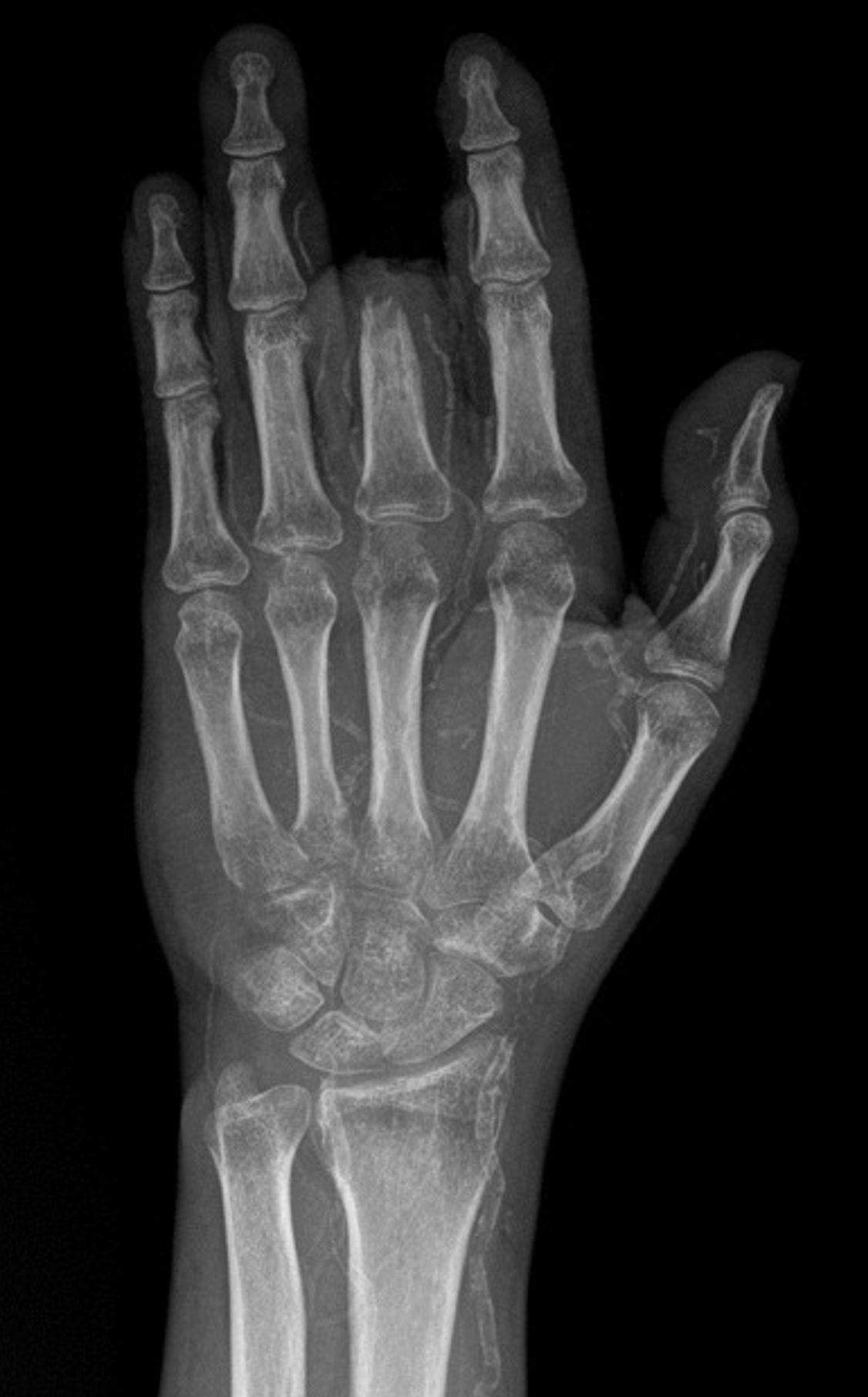
Case Report: A 46-year-old male patient with end-stage chronic kidney disease secondary to type 2 diabetes mellitus and arterial hypertension had been undergoing hemodialysis since January 2023 via a left brachiocephalic arteriovenous fistula. He presented with persistent pain, skin color changes, diminished radial and ulnar pulses, and a distal lesion on the third digit. The ischemia progressed to necrosis of the middle and ring fingers; a diagnosis of fistula-associated distal hypoperfusion syndrome and diabetic arteriopathy was made. The patient required closure of the vascular access, serial debridements, and amputation of the third digit. Radiography revealed severe Mönckeberg-type arterial calcification, precluding revascularization. Cultures isolated extended-spectrum beta-lactamase (ESBL)-producing *Klebsiella pneumoniae* and *Serratia marcescens*; the patient was treated with meropenem based on susceptibility results, showing a favorable outcome. A tunneled right jugular hemodialysis access was placed on the same day as the fistula closure surgery, allowing him to remain in the hemodialysis program (4-hour sessions three times weekly with an access flow of 400 mL/min) (Figures 1–4).
Conclusions: Early monitoring for ischemic symptoms in diabetic patients with a history of vascular access is crucial. Timely vascular assessment and individualized treatment can limit progression toward necrosis, infection, and functional loss of the limb.
Downloads
Published
Issue
Section
License
Copyright (c) 2026 Christian Saturio Cedeño Mendoza, César Intriago, Cristopher Escudero, René Santos Castro Jalca, Elvis Alexander Macías Vinces. (Author)

This work is licensed under a Creative Commons Attribution-NonCommercial-ShareAlike 4.0 International License.
 10.56867