
Prevalencia de la ansiedad en pacientes con enfermedad renal y sus factores asociados desde el Modelo Ecológico de Bronfenbrenner.
DOI:
https://doi.org/10.56867/Palabras clave:
Ansiedad, Pacientes con enfermedad renal, Factores asociados, Modelo Ecológico de BronfenbrennerResumen
Introducción: En pacientes con enfermedad renal, la ansiedad se considera un trastorno emocional frecuente debido a los cambios significativos en sus vidas, a la enfermedad que presentan y a la necesidad inminente de iniciar hemodiálisis para mantenerse con vida. El objetivo de este trabajo consistió en determinar la existencia de investigaciones sobre la prevalencia de ansiedad en pacientes renales de países hispanos, qué instrumentos psicométricos se utilizaron para evaluar esta variable y, desde el Modelo Ecológico de Bronfenbrenner, señalar factores que podrían originar y mantener el trastorno psicopatológico de ansiedad en el grupo poblacional señalado.
Materiales y Métodos: Se presenta una revisión bibliográfica de estudios publicados en los últimos 10 años sobre la prevalencia de ansiedad en pacientes con enfermedad renal en países hispanos, indexados en Scielo, PubMed, Scopus, Springer y Google Académico. Además, de reportes en dos tesis doctorales.
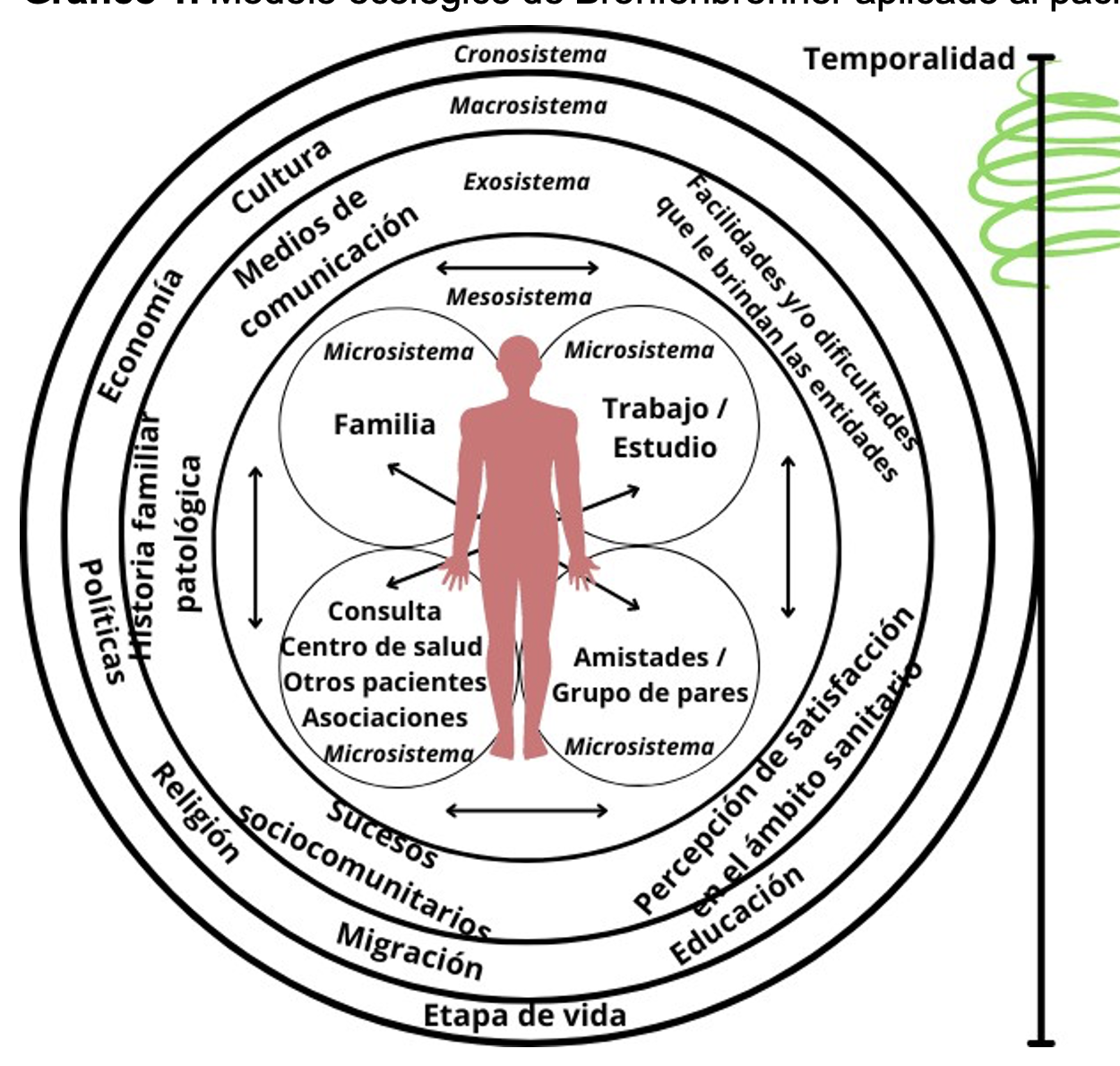
Resultados: La revisión identificó estimaciones de prevalencia de ansiedad en pacientes con enfermedad renal crónica que oscilaron entre el 21.4% y el 93% en países hispanos, predominando niveles de severidad moderada a alta y una mayor vulnerabilidad en mujeres y en pacientes con mayor tiempo en hemodiálisis. Los instrumentos de evaluación más utilizados fueron la Hospital Anxiety and Depression Scale (HADS), el Inventario de Ansiedad de Beck (BAI) y la Escala de Hamilton. Los principales factores vinculados a la ansiedad abarcan variables clínicas y biológicas (índice de masa corporal, comorbilidades y alteraciones del sueño), aspectos psicosociales (estilos de afrontamiento, pérdida de independencia, cambios de roles y red de apoyo familiar), así como estresores del entorno de tratamiento, como los estímulos sonoros del hemodializador y los costos económicos. La Teoría Ecológica de los Sistemas o también nombrada Modelo Ecológico, que postula Urie Bronfenbrenner (1917-2005), permite distinguir y valorar en el binomio persona-ambiente aquellos elementos que inciden directa o indirectamente.
Conclusiones: La prevalencia de ansiedad que presentan los pacientes renales se corroboró con los hallazgos de estudios empleados en este trabajo, confirmando un alto el índice de incidencia de este trastorno emocional. Evaluar el estado emocional de las personas con enfermedad renal crónica en hemodiálisis es fundamental. El Modelo Ecológico de Bronfenbrenner puede ser una alternativa válida y trasladable en el campo de la investigación y del trabajo psicológico (psicodiagnóstico y psicoterapia) con pacientes renales. En Ecuador, en el ámbito psicológico aplicado para este grupo poblacional aún es escasa la evidencia científica.
Publicado
Número
Sección
Licencia
Derechos de autor 2026 Mónica Castro Ponce, Erika López López (Author)

Esta obra está bajo una licencia internacional Creative Commons Atribución-NoComercial-CompartirIgual 4.0.
 10.56867